- Where is Melbourne?
- Melbourne is in Greater Melbourne, Victoria, Australia. The destination guide above maps the area; the drive-times panel further down lists distances to other Victoria destinations so you can pencil it into a longer itinerary.
- When is the best time to visit Melbourne?
- Based on 30 years of climate data, the most comfortable months at Melbourne are typically September, August, October — milder temperatures, lower rainfall, and longer sunshine hours. February tends to be the trickiest month weather-wise. School holiday weeks (Easter, late June–early July, late September, mid-December–late January) get busy and prices rise, so shoulder season is usually the sweet spot if you're flexible.
- What's the weather like in Melbourne?
- Summer daytime highs average around 42°C and winter overnight lows can drop to about 1°C. Annual rainfall sits at roughly 715 mm spread across the year. The climate panel above breaks every month down — daytime high, overnight low, monthly rain, sunny days — so you can match the trip to the weather you want.
- How do I get to Melbourne?
- Most travellers arrive by road. From Dandenong Ranges it's about 45 km — roughly 0h 47m of driving via the main highway, conditions permitting. The drive-times panel above lists travel time and distance to every other Victoria destination so you can sketch out a road-trip route. Check road conditions in winter if your route crosses high country, and plan for breaks every ~2 hours.
- What are the top things to see in Melbourne?
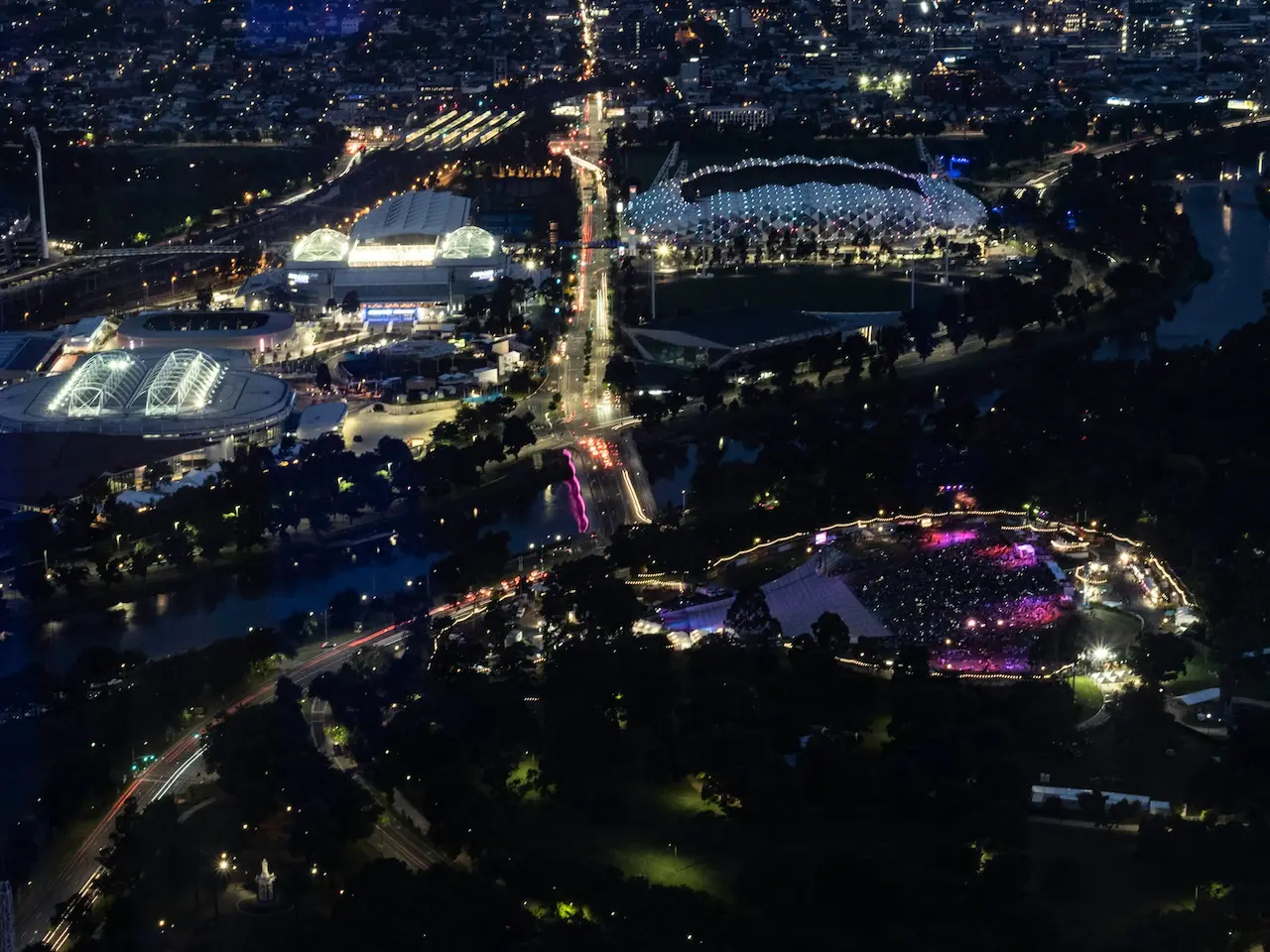
- Well-known spots within day-trip range include Street Art, Century Building, RMIT Capitol Theatre, ANZ Banking Museum, The Big Clock. The "What else is around" panel above lists every named point of interest by category — lookouts, peaks, waterfalls, museums, beaches — pulled straight from OpenStreetMap. Click any name for the location, opening hours and directions.
- Where can I stay near Melbourne?
- We list 6 caravan and holiday parks in and around Melbourne above — powered sites, cabins, glamping, and big-rig-friendly options. Pet rules, dump points and shaded sites are noted on each park's page. For hotel-style stays, the Drive Times panel makes it easy to base yourself in a nearby town and day-trip in.
- How many days should I spend at Melbourne?
- Most travellers spend 1–2 days at Melbourne to cover the highlights without rushing. There are 8 bookable tours and experiences, 0 attractions and 5+ named viewpoints/landmarks listed for the area on this page — plenty to fill a weekend, more if you slow down and explore the outer reaches.
- Is Melbourne good for families with kids?
- Yes — there are 31 family-friendly attractions, museums and family destinations within easy reach (zoos, aquariums, interactive museums, family-friendly theme parks). The caravan parks section above flags parks with playgrounds, kids' pools and family cabins.
- What day trips can I do from Melbourne?
- Within ~2.5 hours' drive: Dandenong Ranges, Yarra Valley, Geelong & Bellarine, Mornington Peninsula. The drive-times panel above lists every nearby destination with road distance and travel time — pick one, drive across in the morning, and you're back for dinner.
- Is there public transport at Melbourne?
- Coverage varies — major destinations have train and bus links from the closest capital, but smaller regional towns rely on infrequent coach services. The most reliable way to explore the wider area is a hire car or your own vehicle. If you're using public transport, plan around the timetables and check the night before you travel; rural routes are often once or twice a day.
- Is Melbourne accessible for wheelchair users and reduced mobility?
- Major town centres, museums and built-up tourist precincts at Melbourne are usually accessible; bush walks and lookouts vary widely. The OpenStreetMap data underneath the "What else is around" panel records wheelchair access on individual sites — click through to any place's page for the specific accessibility info. For tours, check the operator's website or call ahead; most reputable operators publish their access details.
- How much does a trip to Melbourne cost?
- Budget travellers can do Melbourne on roughly $120–180 per person per day (caravan park, cooking your own, free walks); mid-range $200–350 (hotel, paid attractions, eating out once a day); higher-end $400+ (boutique stays, tours, fine dining). Fuel is the big variable — Australia's regional driving distances add up. Tours and attractions in the listings above show prices in AUD where the operator publishes them.
- Will I have phone signal at Melbourne?
- Most named destinations in Victoria have at least Telstra and Optus coverage in town. Coverage drops off quickly outside built-up areas — particularly in national parks, valleys and along long stretches of highway. If you're heading into remote areas, download offline maps before you leave, tell someone your itinerary, and consider a PLB (personal locator beacon) for serious bush walks.